
Prostate cancer remains one of the most frequently diagnosed cancers among men worldwide. For many patients, especially those with localized or locally advanced disease, surgical removal of the prostate offers the best opportunity for long-term cancer control and potential cure. As surgical techniques have evolved, the focus has shifted from simply removing the cancer to achieving this goal with the highest level of precision and the least impact on quality of life.
Today, Robotic Radical Prostatectomy stands at the forefront of prostate cancer surgery. It combines advanced robotic technology with refined surgical skill to allow complete tumor removal while protecting the delicate structures responsible for urinary control and sexual function. When this procedure is performed by a highly experienced urologic surgeon, it delivers outstanding oncological results together with improved functional recovery.
What Is Robotic Radical Prostatectomy?
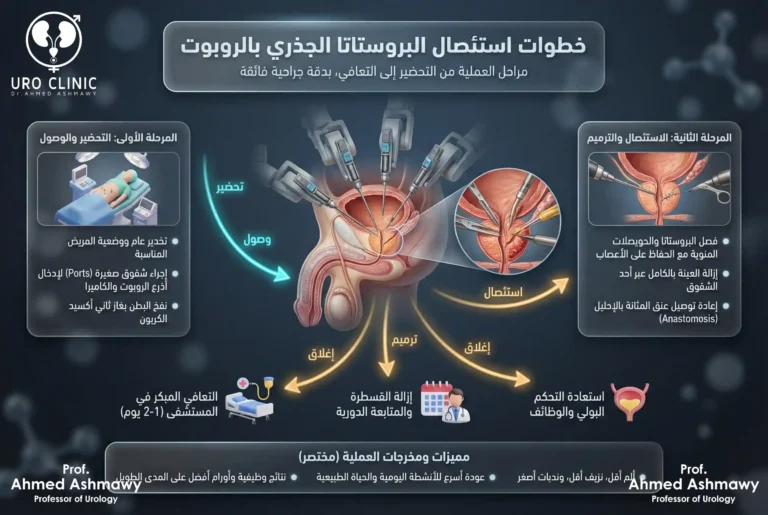
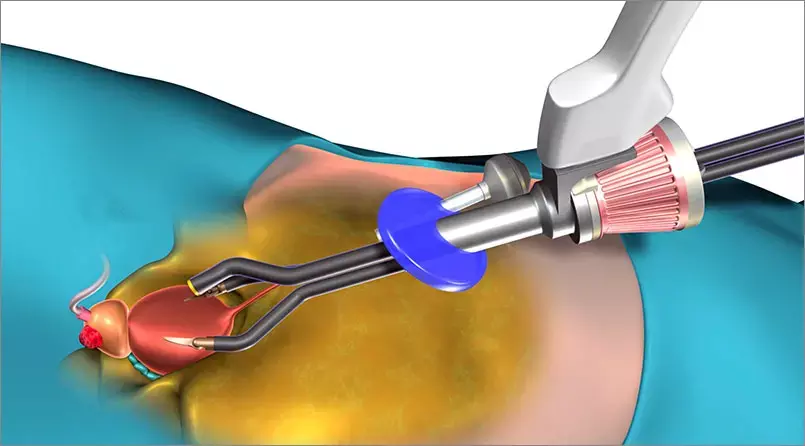
Robotic radical prostatectomy is a minimally invasive procedure in which the prostate gland and, in most cases, the seminal vesicles are completely removed using a robotic surgical platform. The surgeon operates from a console, translating hand movements into highly precise actions performed by robotic instruments inside the patient’s body.
The robotic system offers several technical advantages:
- High-definition, three-dimensional magnified visualization
- Instruments with exceptional flexibility and range of motion
- Tremor elimination for stable and accurate dissection
Despite the presence of advanced technology, the surgeon remains entirely responsible for every surgical decision and movement. This makes experience, judgment, and technical mastery the true determinants of success.
When Is Robotic Radical Prostatectomy Recommended?
Robotic radical prostatectomy is typically recommended when the intent of treatment is complete cancer removal. It is most commonly considered in patients who meet one or more of the following criteria:
- Prostate cancer confined to the prostate or immediately surrounding tissues
- A general health status that allows for surgical intervention
- A desire for definitive cancer treatment with long-term disease control
- Strong consideration for preserving urinary continence and sexual function
Each patient requires an individualized assessment, including PSA trends, biopsy findings, imaging studies, tumor characteristics, and overall medical condition. A tailored decision-making process is essential to ensure the best possible outcome.
Why Robotic Surgery Represents a Major Advancement
The prostate is located deep within the pelvis, surrounded by critical nerves and blood vessels that control continence and erectile function. Traditional open surgery in this area is technically demanding and carries a higher risk of functional complications.
Robotic radical prostatectomy offers a significant advancement by enabling:
- Precise nerve-sparing techniques when oncologically appropriate
- Superior control of bleeding
- Reduced trauma to surrounding tissues
- Enhanced visualization in a confined anatomical space
These factors directly influence cancer control, complication rates, and the speed of postoperative recovery.
Robotic Radical Prostatectomy vs Traditional Surgery
Compared with open radical prostatectomy, robotic surgery provides clear advantages that have reshaped modern prostate cancer care:
- Smaller incisions and reduced postoperative pain
- Lower intraoperative blood loss
- Shorter hospital stay
- Faster return to daily activities
- Improved early functional outcomes
For these reasons, robotic radical prostatectomy has become the preferred surgical approach in many advanced urology centers worldwide.
Preserving Urinary and Sexual Function
One of the most important concerns for men undergoing prostate cancer surgery is the potential impact on urinary continence and sexual performance. Robotic technology allows for meticulous identification and preservation of the neurovascular bundles whenever it is safe from an oncological standpoint.
This level of precision helps:
- Reduce the likelihood of long-term urinary incontinence
- Improve the chances of erectile function recovery
- Maintain overall quality of life after cancer treatment
However, these outcomes are not guaranteed by technology alone. They depend heavily on surgical expertise, anatomical knowledge, disease extent, and individualized surgical planning.
The Central Role of Surgical Experience
While robotic platforms provide powerful tools, the surgeon’s experience remains the single most important factor influencing outcomes. Successful robotic radical prostatectomy requires:
- Accurate patient selection
- Detailed understanding of pelvic anatomy
- Advanced nerve-sparing skills
- Sound intraoperative judgment
- Structured postoperative follow-up
In this context, Ahmed Ashmawy is widely recognized for his expertise in advanced urologic and robotic surgeries. His practice focuses on applying robotic radical prostatectomy with a high level of precision, guided by thorough preoperative evaluation and meticulous surgical technique.
Dr Ahmed Ashmawy’s Philosophy in Robotic Radical Prostatectomy
Dr Ahmed Ashmawy approaches robotic radical prostatectomy as more than a technical procedure. His philosophy centers on delivering personalized cancer care, where each surgical plan is tailored to the individual patient rather than following a standardized template.
Key aspects of his approach include:
- Comprehensive assessment of cancer stage and patient goals
- Careful selection of candidates who will benefit most from robotic surgery
- Strategic nerve-sparing whenever oncologically safe
- Precise execution to minimize complications
- Close postoperative monitoring to optimize recovery
This patient-centered strategy aims to achieve the best balance between cancer eradication and preservation of function.
Recovery After Robotic Radical Prostatectomy
Recovery following robotic radical prostatectomy is generally smoother and faster compared to traditional surgery. Most patients experience:
- Short hospitalization
- Early mobilization
- Gradual improvement in urinary control over time
- Progressive recovery of functional outcomes
Postoperative care includes regular PSA monitoring, assessment of continence and erectile function, and early management of any recovery-related concerns. Structured follow-up plays a crucial role in long-term success.
Is Robotic Radical Prostatectomy Suitable for Every Patient?
Despite its many advantages, robotic radical prostatectomy is not the ideal option for every individual diagnosed with prostate cancer. Some patients may benefit more from alternative approaches such as radiation therapy, hormonal treatment, or active surveillance, depending on tumor characteristics and overall health.
A detailed consultation with an experienced urologic surgeon is essential to determine whether robotic surgery offers a meaningful advantage in a specific case.
Why Patients Place Their Trust in Experienced Surgeons
Patients facing prostate cancer are not only seeking advanced technology; they are seeking confidence, clarity, and expertise. The combination of robotic precision with a surgeon who has extensive experience in complex prostate surgery provides reassurance and improves outcomes.
Dr Ahmed Ashmawy’s reputation in robotic radical prostatectomy is built on consistent surgical results, careful decision-making, and a strong focus on long-term patient well-being rather than short-term technical success.
Why Robotic Radical Prostatectomy Continues to Gain Preference
Patients increasingly choose robotic radical prostatectomy because it offers:
- Effective and definitive cancer treatment
- Reduced surgical trauma
- Faster recovery
- Improved preservation of critical functions
When performed within a structured medical program by an experienced surgeon, it represents one of the most advanced and reliable solutions for prostate cancer treatment today.
Final Thoughts
Robotic radical prostatectomy has fundamentally transformed the surgical management of prostate cancer. By combining cutting-edge robotic technology with expert surgical execution, it allows precise cancer removal while prioritizing functional preservation and quality of life.
Its success, however, is driven not by the robot alone, but by the surgeon who operates it. Under the care of an experienced urologic surgeon such as Dr Ahmed Ashmawy, robotic radical prostatectomy becomes a carefully planned, expertly executed procedure aimed at achieving optimal oncological outcomes and long-term patient satisfaction, making it a cornerstone of modern prostate cancer care.