
Kidney tumors are increasingly detected at early stages, often during routine imaging performed for unrelated reasons. In many of these cases, the primary goal of treatment is not only complete tumor removal but also preservation of healthy kidney tissue. This balance between cancer control and kidney function has made Robotic Partial Nephrectomy one of the most advanced and preferred surgical options in modern urology.
Robotic partial nephrectomy allows surgeons to remove kidney tumors with extreme precision while preserving as much normal kidney tissue as possible. When performed by an experienced urologic surgeon, it offers excellent oncological outcomes, reduced complications, and long-term preservation of renal function.
What Is Robotic Partial Nephrectomy?
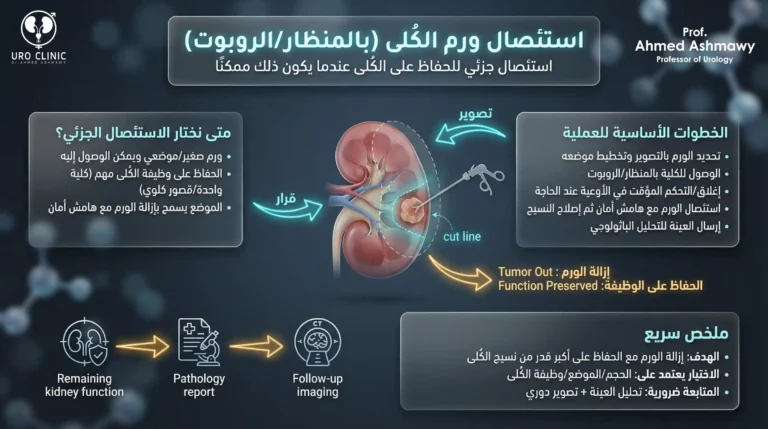
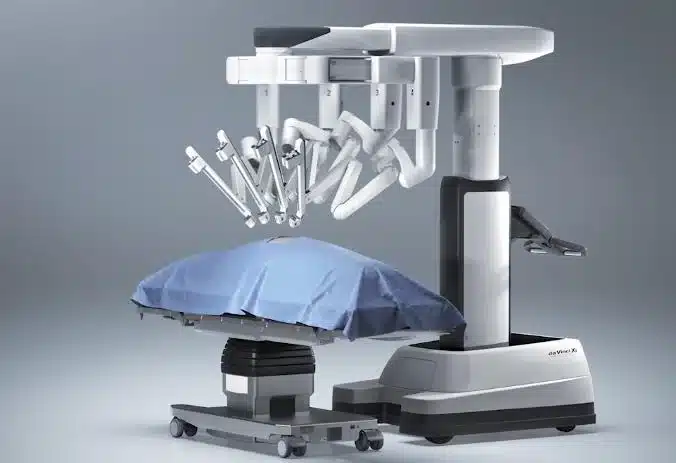
Robotic partial nephrectomy is a minimally invasive surgical procedure in which only the kidney tumor and a small margin of surrounding tissue are removed, rather than removing the entire kidney. The procedure is performed using a robotic surgical system that provides enhanced visualization and highly precise instrument control.
The robotic platform enables:
- High-definition, three-dimensional magnified vision
- Fine instrument movement beyond the limits of the human wrist
- Stable, tremor-free dissection
- Accurate tumor excision and kidney reconstruction
Despite the use of advanced technology, the surgeon remains fully in control of every step of the operation.
When Is Robotic Partial Nephrectomy Recommended?
Robotic partial nephrectomy is commonly recommended for patients with:
- Small to moderate-sized kidney tumors
- Tumors confined to the kidney
- A desire to preserve kidney function
- Pre-existing kidney disease or risk of future renal impairment
It is especially valuable in patients with a single kidney, bilateral tumors, or conditions where long-term kidney preservation is critical.
Why Partial Nephrectomy Is Preferred Over Total Kidney Removal
In the past, many kidney tumors were treated by removing the entire kidney. While effective for cancer control, this approach may increase the risk of chronic kidney disease over time.
Robotic partial nephrectomy offers a more refined alternative by:
- Preserving healthy kidney tissue
- Maintaining long-term renal function
- Reducing the risk of kidney failure
- Providing equivalent cancer control for suitable tumors
This organ-sparing philosophy is now considered the standard of care for many localized kidney tumors.
Advantages of Robotic Assistance in Partial Nephrectomy
The kidney is a highly vascular organ, making precise dissection and bleeding control essential. Robotic technology enhances the surgeon’s ability to work safely within this complex anatomy.
Key advantages include:
- Superior visualization of tumor margins
- Precise control of blood vessels
- Reduced warm ischemia time
- Accurate kidney reconstruction after tumor removal
These factors contribute directly to safer surgery and better functional outcomes.
Robotic Partial Nephrectomy vs Open and Laparoscopic Surgery
Compared with traditional open surgery, robotic partial nephrectomy offers:
- Smaller incisions
- Less postoperative pain
- Reduced blood loss
- Faster recovery
- Shorter hospital stay
Compared with standard laparoscopy, robotic surgery provides improved dexterity and visualization, which is particularly important for complex or deeply located kidney tumors.
Preserving Kidney Function and Quality of Life
One of the most important goals of robotic partial nephrectomy is preserving kidney function without compromising cancer control. Precise tumor excision and meticulous reconstruction help maintain blood flow and kidney performance after surgery.
Patients often benefit from:
- Stable long-term kidney function
- Lower risk of chronic kidney disease
- Faster return to daily activities
- Improved overall quality of life
These benefits are especially significant for younger patients and those with existing medical conditions.
The Critical Role of Surgical Expertise
While robotic systems provide advanced tools, the surgeon’s experience is the most important factor in determining outcomes. Partial nephrectomy is technically demanding and requires:
- Deep understanding of renal anatomy
- Advanced vascular control skills
- Ability to manage complex tumor locations
- Precise suturing and reconstruction
In this field, Ahmed Ashmawy is known for his expertise in advanced urologic and robotic surgeries, including robotic partial nephrectomy. His surgical approach focuses on individualized planning, meticulous tumor removal, and preservation of kidney function whenever oncologically appropriate.
Dr Ahmed Ashmawy’s Approach to Robotic Partial Nephrectomy
Dr Ahmed Ashmawy emphasizes careful preoperative assessment to determine whether partial nephrectomy is the optimal option for each patient. This includes detailed imaging analysis, evaluation of kidney function, and assessment of tumor complexity.
Key elements of his approach include:
- Selecting kidney-sparing surgery whenever safe
- Minimizing ischemia time during tumor removal
- Precise reconstruction of kidney tissue
- Close postoperative monitoring of renal function
This comprehensive strategy ensures both effective cancer treatment and long-term kidney health.
Safety Profile and Complication Reduction
Robotic partial nephrectomy has an excellent safety profile when performed by experienced surgeons. Advanced visualization and precise instrument control help reduce complications such as excessive bleeding or damage to surrounding structures.
The procedure is particularly suitable for patients who:
- Require precise tumor excision
- Have medical conditions affecting kidney health
- Need a minimally invasive but definitive solution
Proper surgical expertise significantly lowers complication rates and improves recovery.
Recovery After Robotic Partial Nephrectomy
Recovery after robotic partial nephrectomy is typically smooth and predictable. Most patients experience:
- Early mobilization after surgery
- Short hospital stays
- Gradual return to normal activity
- Ongoing monitoring of kidney function
Follow-up imaging and laboratory tests are used to ensure long-term success and early detection of any issues.
Long-Term Outcomes and Cancer Control
For appropriately selected tumors, robotic partial nephrectomy provides excellent long-term cancer control comparable to radical nephrectomy. At the same time, it offers the added benefit of preserving kidney tissue and reducing long-term health risks.
Durable oncological outcomes combined with functional preservation make robotic partial nephrectomy a cornerstone of modern kidney cancer management.
Why Robotic Partial Nephrectomy Represents the Future
As surgical technology and expertise continue to advance, robotic partial nephrectomy is increasingly becoming the preferred approach for localized kidney tumors. It reflects a shift toward precision medicine, where treatment is tailored to both disease control and long-term patient well-being.
Final Thoughts
Robotic partial nephrectomy is a highly advanced surgical technique that allows precise removal of kidney tumors while preserving healthy renal tissue. Its success depends not only on robotic technology but on the experience and judgment of the surgeon performing the procedure.
Under the care of an experienced urologic surgeon such as Dr Ahmed Ashmawy, patients can benefit from expert surgical planning, meticulous execution, and outcomes that prioritize both cancer control and long-term kidney function.